
First, understand the event
An unexpected door opening, movement in an armed area and a door left open are different events. Start with the location, time and alarm state. A notification should help the recipient find the affected area, rather than leave them searching the whole site.
Look at the visit and the cameras
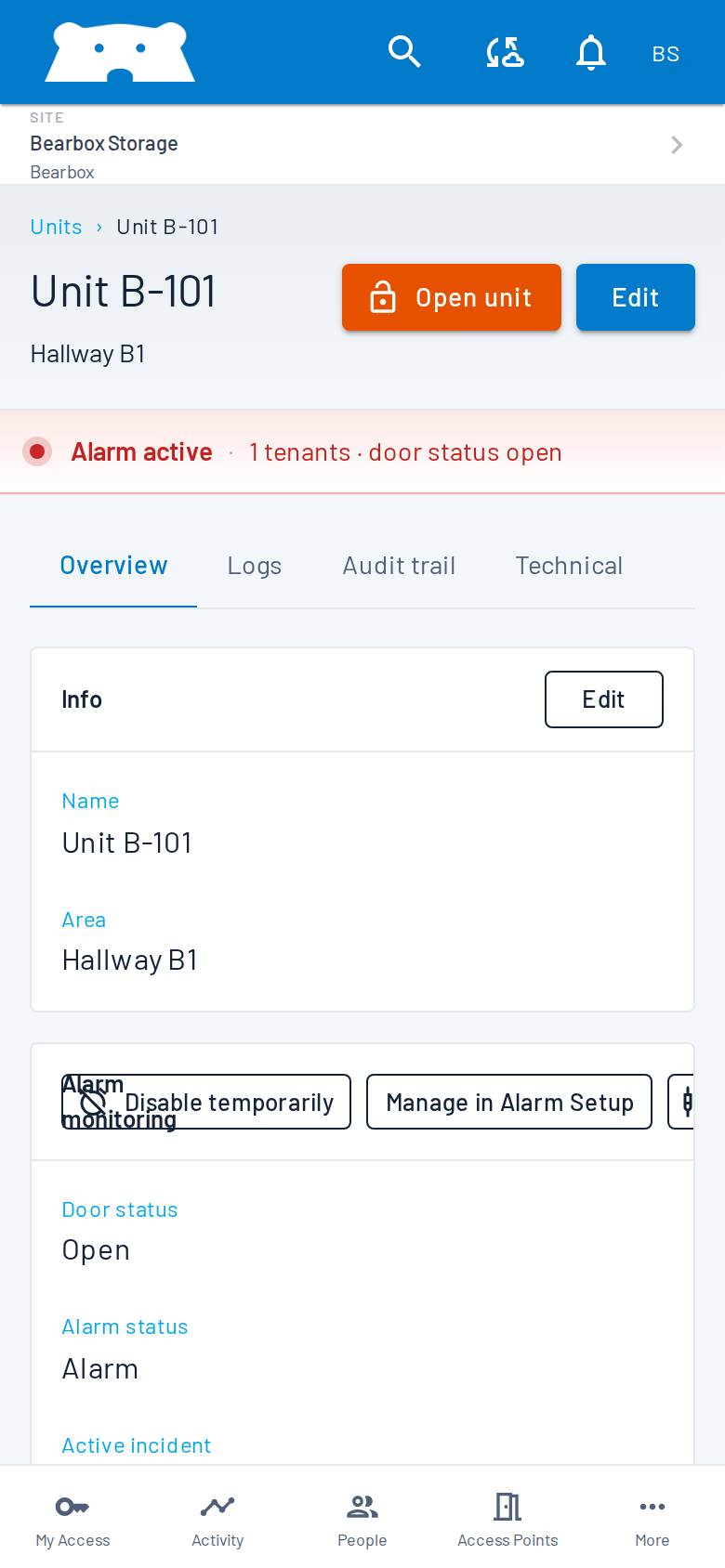
Find the affected unit or area, then check who was visiting and what the relevant cameras show. Live cameras help with an event happening now; stored footage stays with your camera recorder for later review. A door left open during unloading and an unexpected opening in an armed unit call for different decisions.
Make responsibility explicit
Name who handles events during opening hours and after closing. Include what happens when that person cannot answer. Distinguish a notification sent to a phone from an event accepted by a monitoring team. The next step should not depend on an owner happening to see a message in the middle of the night.
How a monitoring station fits
An alarm receiving centre, or ARC, accepts supported alarm events and follows your agreed procedure. DSOC offers alarm and CCTV monitoring for self-storage. Agree which events reach its team, which camera views they can use, and how they contact you or request a response.
Agree what happens after each alarm
For a suspected intrusion, the procedure may include checking cameras, contacting a nominated person, live audio warnings or requesting a response. What happens depends on the agreed service and available equipment. A different procedure may be appropriate for an ordinary left-open door.
Who checks?
Identify the team or monitoring service responsible for assessing the event.
What can they use?
Confirm camera views, access information and current site details.
Who acts next?
Agree escalation contacts and the steps for each event type.
Keep the response plan current
Keep contact details and site information up to date. Test that alarms reach the right people after equipment changes and update notification recipients when staff leave. Keep a record of the alarm, the checks made and the action taken, so your team can review the incident later.